Camera and Radar Calibration After Structural Repairs: A Workflow Guide for Collision Shops
Bloomington, United States - March 13, 2026 / Minnesota ADAS Solutions /
Bloomington, MN – Vehicles repaired after collisions often require additional steps before they are ready to return to the road. Structural repairs can shift the position of cameras and radar sensors, affecting how advanced driver assistance systems operate. MN ADAS Solutions, Bloomington, provides specialized calibration services that help collision shops restore system accuracy after repairs.
The facility focuses on camera and radar calibration for modern vehicles equipped with advanced safety technology. These services support systems such as adaptive cruise control, lane departure warning, forward collision warning, and blind spot monitoring. A structured calibration workflow allows repair teams to complete post-repair work with clarity and consistency.

Why Camera and Radar Calibration Is Required After Structural Repairs
Structural damage repairs can change sensor angles, mounting points, and reference positions. Even minor adjustments to the frame, windshield, or body panels may affect how cameras and radar units read the environment. Camera and radar calibration corrects these changes and allows vehicle safety systems to function properly again.
Systems that rely on precise sensor data include adaptive cruise control calibration, lane departure warning calibration, forward collision warning calibration, and blind spot monitoring calibration. If calibration is skipped, these features may produce incorrect alerts or fail to respond during driving.
Common risks linked to uncalibrated systems include:
- False warnings that distract drivers
- Delayed braking responses
- Missed lane markings
- Inaccurate blind spot alerts
Signs That a Vehicle Needs Camera and Radar Calibration
Some vehicles show visible signs that calibration is required after repairs. Collision shops and vehicle owners should watch for changes in how safety features behave.
Post-Repair Triggers
Camera and radar calibration are required after:
- Structural or body repairs involving the frame or panels
- Windshield replacement that affects forward-facing cameras
- Sensor replacement tied to adaptive cruise control or lane detection
- Suspension or wheel alignment work that changes ride height
Each of these repairs can alter sensor position and affect system response.
Warning Indicators
Drivers may notice:
- Dashboard alerts related to ADAS features
- Adaptive cruise control is not maintaining the distance correctly
- Lane departure warning is failing to activate
- Unexpected braking or alerts
These signs often point to the need for camera and radar calibration.
The Calibration Workflow Used by Collision Shops
A clear workflow helps collision shops manage post-repair calibration efficiently.
Step 1 – Diagnostics
Initial diagnostics identify system errors and sensor misalignment. Technicians scan the vehicle to review fault codes and system status. This step establishes a baseline for comparison after calibration.
Step 2 – Completion of Structural Repairs
Before calibration, all repairs must meet the manufacturer’s measurements. Panels, glass, and mounting points must be installed correctly so sensors sit in the proper position.
Step 3 – Sensor and Camera Alignment
Physical alignment adjusts cameras and radar units using calibration targets and measurement tools. This step supports adaptive cruise control calibration, lane departure warning calibration, and forward collision warning calibration by correcting sensor angles.
Step 4 – Software Calibration
Software calibration allows sensors to communicate with the vehicle’s control modules. Blind spot monitoring calibration is verified during this stage to confirm that alerts activate correctly.
Step 5 – Verification and Documentation
Final checks confirm that all systems respond correctly. Detailed reports document diagnostics, alignment, and testing results for repair records and insurance files.
Best Practices for Collision Shops
Collision shops benefit from standardized calibration processes.
Recommended practices include:
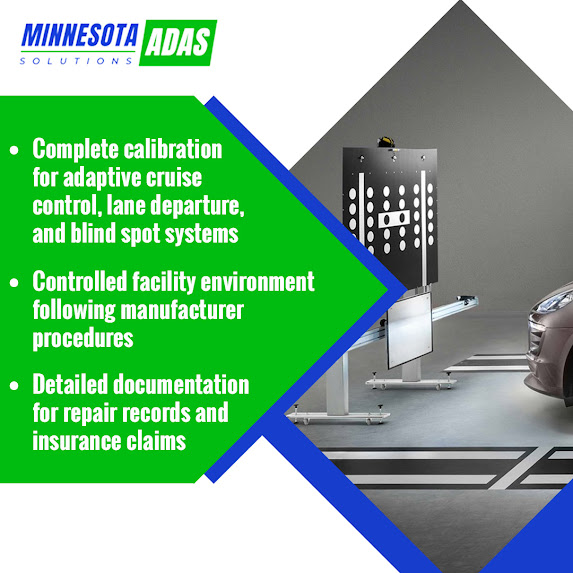
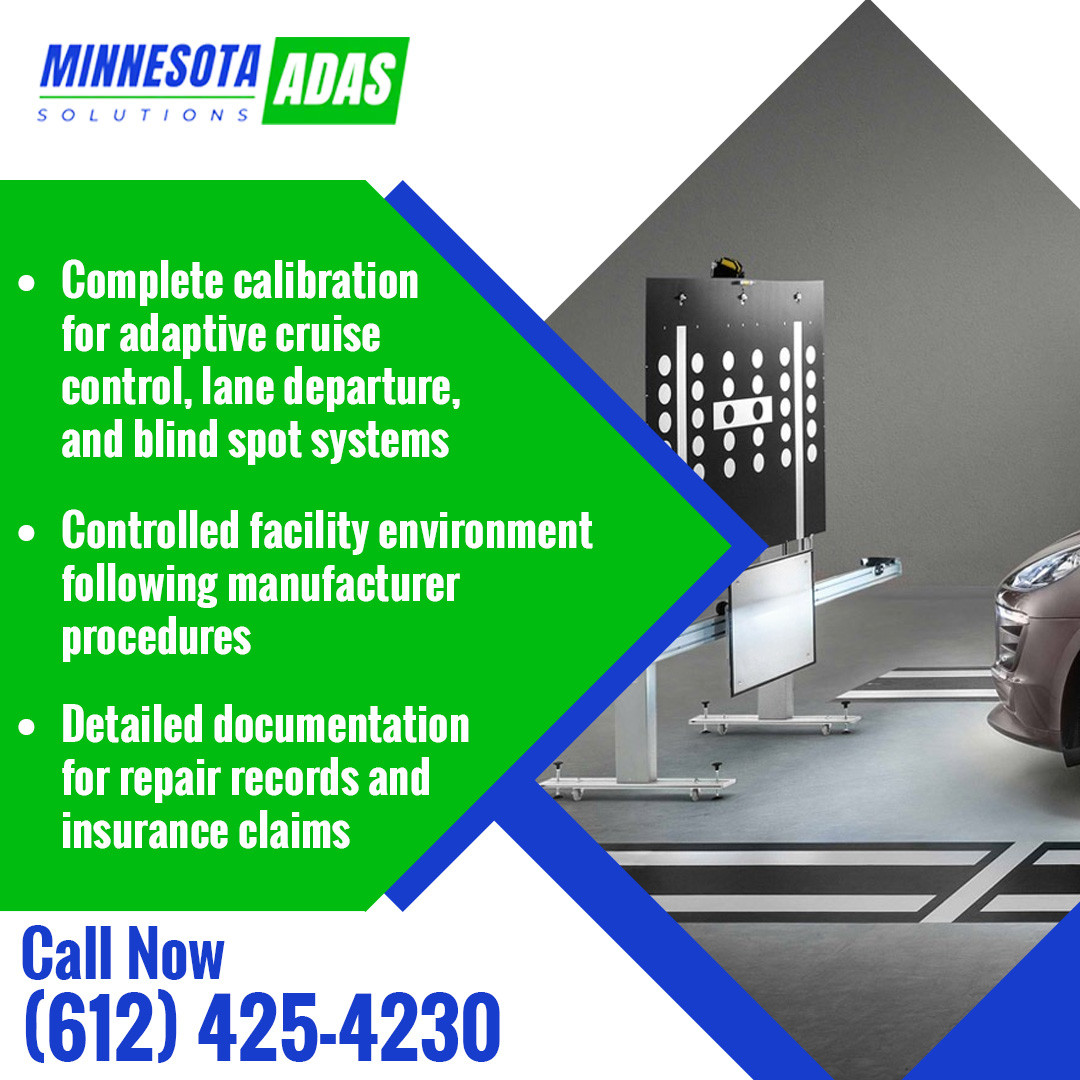
- Using a controlled indoor calibration environment
- Following the manufacturer’s procedures for each vehicle
- Documenting every step of camera and radar calibration
- Scheduling calibration immediately after repairs
These steps support consistent results across different vehicle models.
Why Minnesota ADAS Solutions Is the Trusted Choice for ADAS Calibration
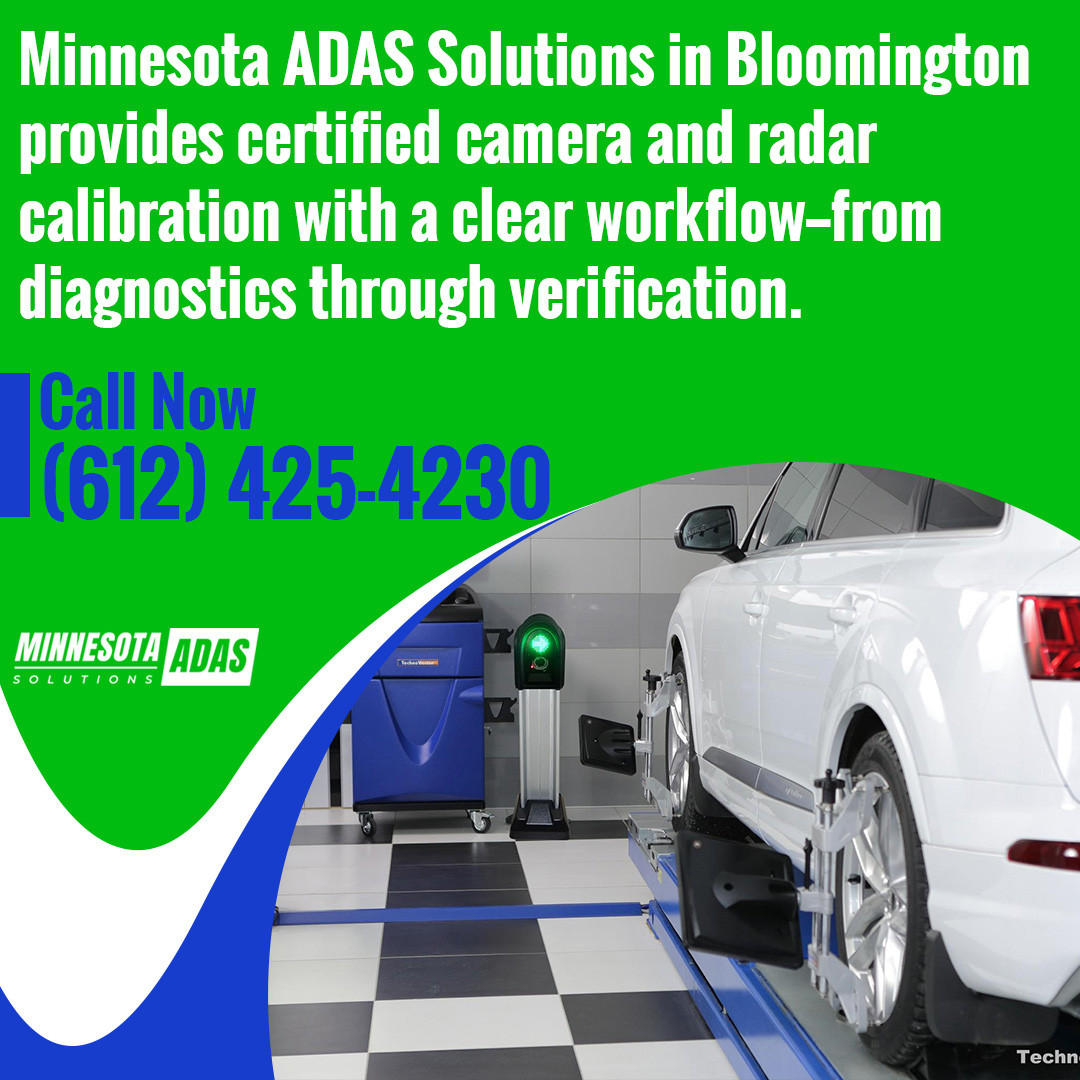
Minnesota ADAS Solutions operates a certified calibration facility in Bloomington, MN. The company focuses solely on ADAS services and does not offer mobile calibration. This allows technicians to work in a stable environment designed for accurate camera and radar calibration.
Technicians specialize in adaptive cruise control calibration, lane departure warning calibration, forward collision warning calibration, and blind spot monitoring calibration. Most services are completed within 90 minutes, supporting efficient repair timelines. Each calibration includes detailed documentation for body shops, insurers, and vehicle owners.
Schedule Your Camera and Radar Calibration with Minnesota ADAS Solutions
Collision shops can schedule services directly with Minnesota ADAS Solutions. Appointments are available by phone at (612) 425-4230 or by email at info@mnadas.com. Online scheduling is also available through the company website. By following a structured calibration workflow, they support collision repair teams with reliable camera and radar calibration services after structural repairs.
Contact Information:
Minnesota ADAS Solutions
9555 James Ave S
Bloomington, MN 55431
United States
CJ Peeters
(612) 425-4230
https://www.mnadas.com/
Original Source: https://www.mnadas.com/adas/camera-and-radar-calibration-after-structural-repairs-a-workflow-guide-for-collision-shops/
